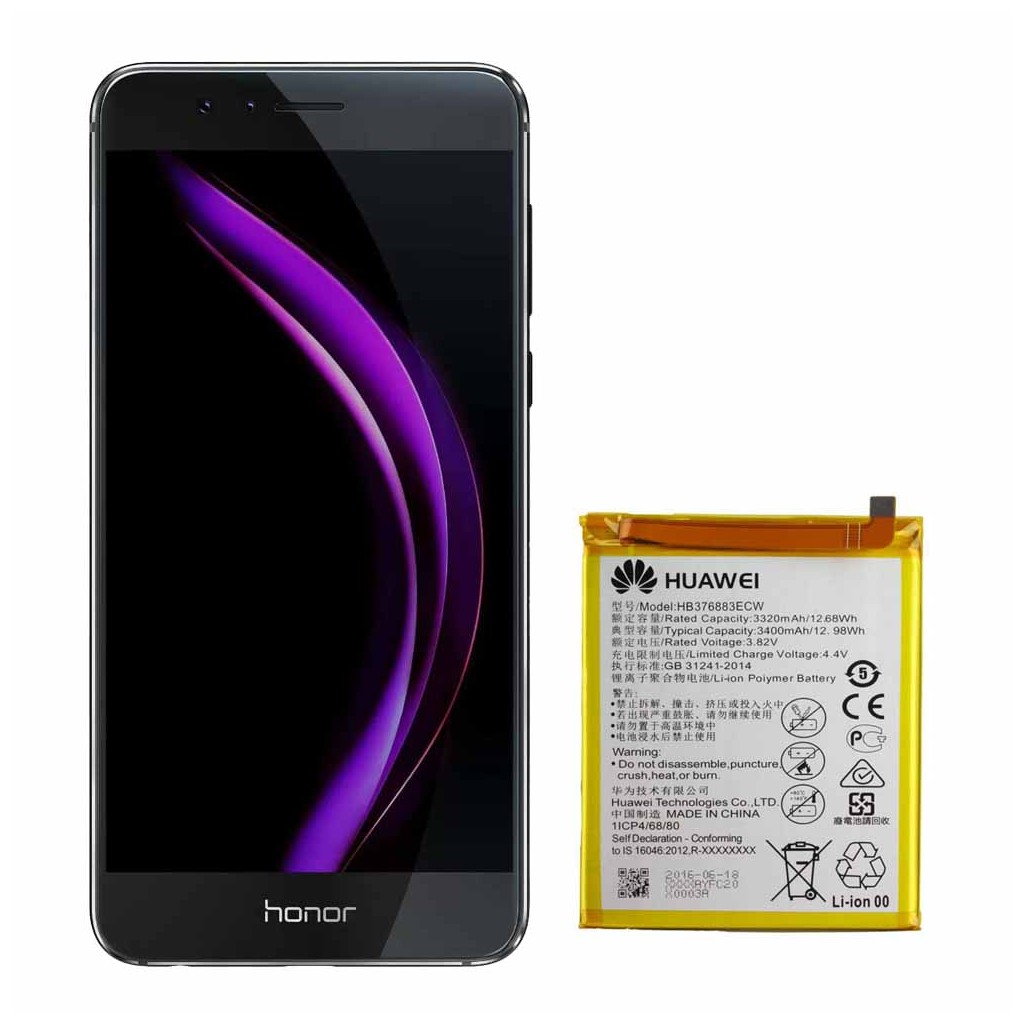
اگر به دنبال تعویض باتری هواوی آنر 8 هستید یا قصد خرید باتری هواوی آنر 8 را دارید، در این صفحه میتوانید اطلاعات مفیدی درباره این باتری و ویژگیهای آن پیدا کنید.
Real experiences battery
When a Huawei Honor 8 suddenly powers off while you’re in the middle of a call or scrolling through Instagram, the first thought is usually “the battery is dead”. In my workshop, I’ve seen that panic many times, and the truth is often more complicated than a simple worn‑out cell.
Sudden shutdown – what’s really happening?
The Honor 8 uses a 3000 mAh Li‑ion pack that talks to the power management IC (PMIC) constantly. If the voltage drops below a critical threshold, the PMIC cuts power to protect the board. That drop can be caused by a swollen cell, a loose connector, a failing PMIC, or even a software glitch that misreads the battery’s state of charge.
In about 30 % of the cases I receive, the symptom is a sudden shutdown, but the root cause can be any of the following:
- Fast battery drain due to a degraded cell.
- Battery swelling that pushes the connector out of place.
- Overheating that forces the PMIC to shut down the phone.
- Incorrect percentage display caused by calibration errors.
- Power IC failure that mimics a dead battery.
cost for in 2026
Standard replacement: 900,000 Tomans
Time: 1 hour to 2 hours
Common Battery Issues
- Fast battery drain
- Sudden shutdown
- Battery swelling
- Overheating
- Incorrect percentage display
- Incomplete charging
- Severe performance drop
Misdiagnosis Cases
- Motherboard failure
- Power IC failure
- Software issue
- Faulty cable or charger
- High app consumption
- Calibration issues
Real case table
| Model | Problem | Real cause | Outcome |
|---|---|---|---|
| Huawei Honor 8 | Sudden shutdown during video playback | Swollen battery pressing the connector | Battery replaced – phone stable for 6 months |
| Huawei Honor 8 | Random power‑off after update | Power IC malfunction, not the battery | PMIC repaired – issue resolved |
| Huawei Honor 8 | Battery percentage jumps from 45 % to 10 % | Software calibration error | Calibration reset via service menu – normal behavior restored |
| Huawei Honor 8 | Phone overheats and shuts down | Non‑original low‑quality battery causing internal resistance | Genuine battery installed – temperature normalized |
| Huawei Honor 8 | Battery replaced last month, still shuts down | Faulty charging cable delivering inconsistent voltage | Cable replaced – battery now works fine |
Real repair experiences
Case 1 – Swollen cell surprise (112 words)
A customer brought in his Honor 8 complaining that the phone turned off randomly, especially when the screen was bright. He was convinced the battery was the culprit. I opened the back, and the cell was visibly bulging, lifting the connector just enough to create intermittent contact. I replaced the swollen pack with a genuine 3000 mAh unit, re‑secured the bracket, and ran a stress test. The phone stayed on for over 8 hours of continuous video playback. He left relieved, but I warned him that a swollen battery is a safety hazard, not just an inconvenience.
Case 2 – Power IC masquerade (124 words)
Another client reported that his Honor 8 shut down after a recent Android update. The battery was only six months old, and the voltage read perfectly healthy. I ran a diagnostic and saw the PMIC reporting a voltage drop that didn’t match the actual cell voltage. The culprit turned out to be a failing power IC that was cutting power to protect the board. Replacing the IC restored stability; the battery was fine. This case reminded me that not every sudden shutdown is a battery problem, and a thorough board test saves both time and money.
Case 3 – Calibration confusion (98 words)
A young user told me his phone showed 80 % charge but died after a short walk. I suspected a bad cell, but the battery health read 95 % in the service menu. After a full discharge and a calibrated charge cycle, the percentage became accurate and the phone lasted the expected time. The issue was purely software‑related; the battery was healthy. It’s a classic example of why we can’t jump to conclusions without testing.
Case 4 – Non‑original battery nightmare (107 words)
Someone replaced the Honor 8’s battery with a cheap third‑party part from an online marketplace. Within a week the phone started overheating and shutting down during calls. The cheap cell had high internal resistance, generating heat and forcing the PMIC to protect the device. I removed the fake battery, installed a genuine one, and the phone’s temperature dropped to normal levels. The customer learned the hard way that “cheaper” often means “riskier”. We always recommend genuine or high‑quality replacements.
Case 5 – Cable chaos (101 words)
A client returned after a battery swap performed elsewhere. The new battery was fine, but the phone still turned off randomly. I inspected the charging port and found a frayed micro‑USB cable that was delivering fluctuating voltage. Replacing the cable solved the problem instantly. This misdiagnosis taught me that accessories can masquerade as internal faults, and a quick visual check can avoid unnecessary part replacements.
Building trust – why I double‑check everything
Not every symptom points to the battery. In my ten years of repairing phones in Tehran, I’ve learned that the board, the power IC, and even a bad charger can imitate a dead cell. That’s why I always run a full diagnostic before ordering a part. If the battery reads healthy but the phone still shuts down, I move on to the PMIC, then to software, and only then consider a replacement.
Misdiagnosis happens more often than you think. A customer once left convinced that his Honor 8 needed a new battery, only for us to discover a cracked motherboard that required a solder‑bridge repair. By being transparent about the steps I take, I earn confidence and avoid wasted expenses.
When I say “the issue is NOT the battery”, I mean it after I’ve measured voltage, checked the connector, and run a stress test. Only then do I recommend a new pack, backed by a 6‑month warranty that even covers swelling.
FAQ
- How much does a battery replacement cost for the Honor 8?
The standard price is 900,000 Tomans, which includes a genuine 3000 mAh cell and labor. - How long does the replacement take?
Typically between 1 hour and 2 hours, depending on the condition of the back cover and connector. - Why do batteries swell?
Swelling occurs when internal gases build up due to age, over‑charging, or low‑quality cells. It pushes against the chassis and can damage the connector. - Is it dangerous to keep using a swollen battery?
Yes. A swollen cell can leak, overheat, or even rupture, posing a fire risk. Replacement is strongly advised. - What’s the difference between original and fake batteries?
Original batteries match the phone’s voltage and capacity specifications, have proper safety circuits, and last longer. Fake batteries often have lower capacity, higher internal resistance, and can cause overheating or sudden shutdowns.
Conclusion
Deciding whether to replace the battery of a Huawei Honor 8 after a sudden shutdown isn’t always straightforward. In my workshop, I’ve seen batteries that were the real problem, and I’ve also seen boards, power ICs, or even a cheap charger that fooled the owner. The safest path is a systematic test: check the voltage, inspect the connector, run a stress test, and only then order a new cell. If the battery is the issue, a genuine replacement with a 6‑month warranty will bring the phone back to life in under two hours. If it isn’t, you’ll save both time and money by fixing the actual component.


